

Ever get confused by your credit score? It’s like a money report card that shows how you handle your bills. Whether you pay on time or owe a lot, every little action counts.
Let’s break it down together. Think of paying your bills on time as a gold star in school, it helps bump up your score. And just like keeping your room tidy, having a lower balance makes everything look better.
Stick with me. I’ll walk you through the simple parts of your score so you can see how even small changes can lead to smarter money choices. Ever wonder how a tiny tweak in habits can make a big difference? Let's chat about it!
Credit Score Fundamentals: How Does Credit Score Work
A credit score is a number between 300 and 850. It shows lenders how likely you are to pay back your debts. Think of it as a report card for your money. Your score comes from your credit report, which lists things like whether you paid on time, how much you owe, and if you missed any payments. It’s a bit like checking your school grades to see how you did.
There are two main ways to calculate these scores, FICO and VantageScore. Both look at details from the three big bureaus: Experian, TransUnion, and Equifax. FICO uses a mix of factors, like how often you pay your bills and how much of your credit you’re using. VantageScore checks similar details, but sometimes gives them slightly different weights. Ever wonder how a quick computer check can sift through thousands of data points to guess your financial future? It’s pretty neat.
There isn’t one single formula for this. Instead, a blend of elements is used: your payment history, the amounts you owe, how long you’ve had credit, the types of credit you use, and recent credit inquiries. By making payments on time and managing debt wisely, you build a strong foundation. This steady rhythm shows lenders you’re serious about handling your money responsibly.
Key Factors Influencing Your Credit Score
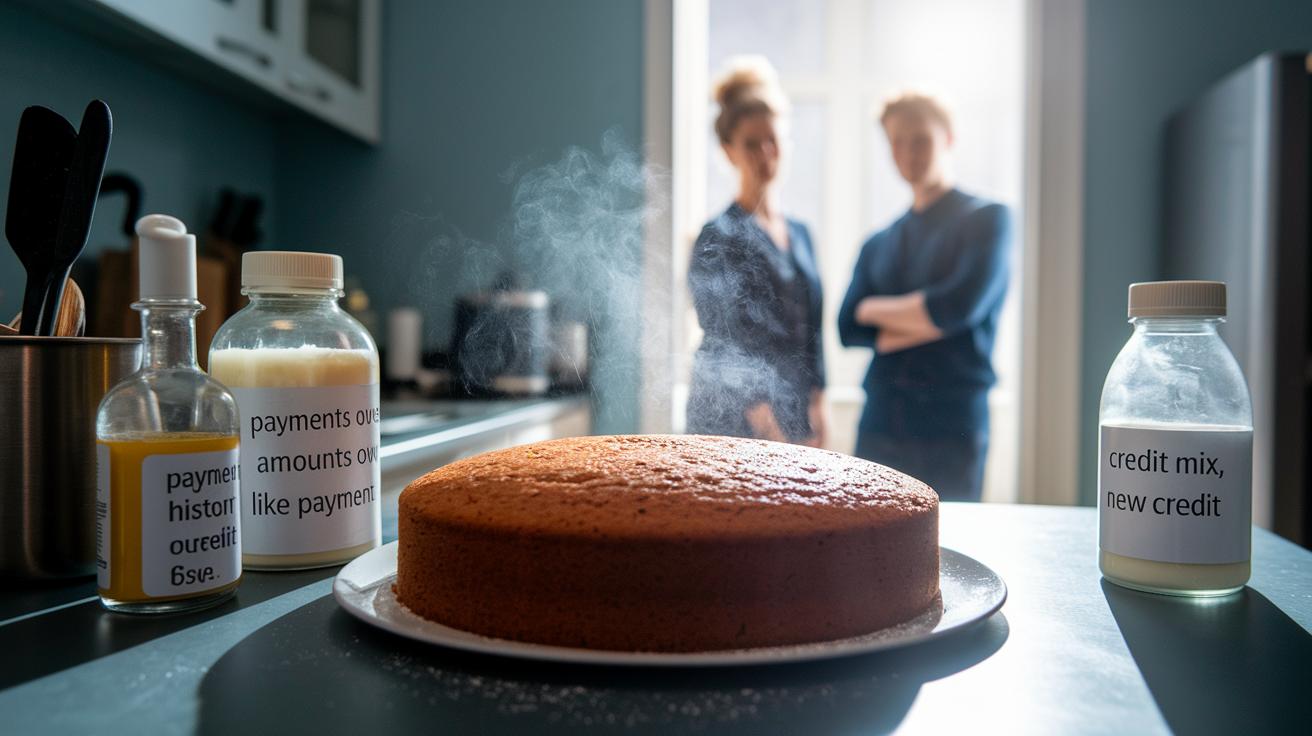
Your credit score is like a report card for your money habits. Lenders look at a few important parts to see how well you handle your finances. Think of it like baking your favorite cake, each ingredient plays a key role. Even one late payment can be like adding an unexpected spice that changes the whole flavor.
Here are the five main parts that shape most credit scores:
- Payment History (35%) – This is like the steady beat of your monthly bills. It checks if you pay on time, sort of like how a trusted clock never misses a tick.
- Amounts Owed (30%) – This shows both how much debt you have and how much of your credit you’re using. Imagine it as balancing your spending with your savings.
- Length of Credit History (15%) – A longer credit history is like a well-worn diary filled with money stories. The older your account, the more trust it builds.
- Credit Mix (10%) – This looks at the variety of loans and accounts you use. Just like having different ingredients in a recipe, a mix shows you can handle different kinds of credit.
- New Credit (10%) – This measures how many new accounts or inquiries you have. Think of it as how quickly you can try new things without upsetting the balance.
Late payments, whether they are 30 days late or more severe events like bankruptcies, can really drag down your score. Keeping your credit use under 30% helps keep your overall score on a healthy track.
How Credit Scoring Algorithms Work
Credit scoring algorithms take the information from your credit report and turn it into a number between 300 and 850. They look at things like your payment history, how much you owe, how long you’ve had credit, the mix of credit types, and what you’ve done recently with credit. It’s like they’re weighing each part of your story to see how safe you are with money.
FICO Score Methodology
FICO uses set weights for each part of your credit story:
- 35% comes from paying on time.
- 30% comes from how much you owe.
- 15% comes from how long you’ve had credit.
- 10% comes from the mix of credit types.
- 10% comes from recent credit actions.
For example, a late payment can drop your score, much like one misstep can tip a balance.
VantageScore Approach
VantageScore works much the same way but tweaked a few things. It still uses a similar range and data points, yet it pays a bit more attention to things like new credit and the variety of credit you use. Here, a “good” score starts at 661. For example, if you bounce back quickly after a hard inquiry, it shows how VantageScore can adapt fast to changes.
Checking and Monitoring Credit Score Activity

Taking a peek at your credit score is like checking your financial pulse. You can grab a free credit report once a year from AnnualCreditReport.com. Lots of banks and credit card companies also let you see free FICO or VantageScore updates on their websites or mobile apps. Imagine opening your bank app and getting a score update just like you’d check the weather – clear and simple.
When you view your own score, it's known as a soft inquiry. That means it doesn’t hurt your score at all, kind of like reading your journal. However, lender requests count as hard inquiries. These can lower your score by about 5 points. But don’t worry, if you keep up with your payments, the score usually bounces back after a few months.
Keeping an eye on your credit often can help you spot any errors or surprises. You might want to set a reminder to check it every month or every few months. It can be as easy as scrolling through your social media feed, and with all the free tools online, staying updated is a breeze.
Spending just a few minutes now and then to review your credit score is a smart move. It’s like checking your fuel gauge during a long drive, ensuring that you’re always ready for the road ahead.
Strategies for Improving Your Credit Score: Bright financial insights
Boosting your credit score can be as simple as following a few easy steps. Paying your bills on time makes up 35% of your score. Setting up reminders or automatic payments can help you hit that mark every month. Think of it as keeping a steady rhythm, like the beat of your favorite song. Keeping your credit card use below 30% shows you can balance borrowing and spending wisely. By tracking every dollar, you can see your score climb as your balances lower.
Here are seven clear and friendly ways to improve your credit score:
- Pay your bills on time each month. It’s like tuning a guitar; when each note is right, the whole melody sounds great.
- Keep your credit card balances low so your credit usage stays under 30%. Picture a jar filled with coins that never overflows.
- Try using tools like Experian Boost. This tool lets you include regular utility or rent payments, which can help nudge your score up.
- Regularly check your credit report and correct any mistakes, like duplicate entries or incorrect late payment records.
- Avoid too many new credit applications at once. Each inquiry can weigh you down a bit, like extra weight in your backpack.
- Keep your older credit accounts open, even if you don’t use them much. They act like strong, old trees that stabilize your financial landscape.
- For more hands-on ideas, visit tips for increasing credit score to keep improving your strategy.
Every little adjustment adds up, stepping you closer to a brighter financial future.
Impact of Credit Score on Loan Eligibility and Terms

A good credit score works like a trusted friend when you need a loan. It shows lenders you handle money well, and that can open doors to better loan rates and terms. For example, if your FICO score is 670 or above, or your VantageScore is 661 or higher, lenders see you as someone who manages finances responsibly. This often means lower interest rates, so your monthly payments on home mortgages, auto loans, student loans, or even credit cards may end up being much more affordable.
When your score climbs past 760, it’s like getting a VIP pass. Lenders are even more confident in you, which can lead to the best interest rates they offer. This might mean you can put down less money initially and have an easier time getting approved for a loan. Simply put, a strong credit score can lower the overall cost of borrowing and ease your financial burden over time.
| Loan Type | Benefits of a High Credit Score |
|---|---|
| Home Mortgages | Lower rates mean more affordable monthly payments. |
| Auto Loans | Better financing conditions that save you money. |
| Student Loans | Favorable terms that help keep repayments manageable. |
If you’re just starting out, there are plenty of ways to build a strong credit score. New borrowers can explore ideas and tips on how to get started by checking out how to start building credit and adopting smart financial habits.
Maintaining and Protecting Your Credit Score Over Time
Your credit score can change from month to month, so it’s important to check it regularly. Just like you quickly peek at a weather app to decide on your outfit, taking a few minutes to review your credit report can help catch any mistakes before they grow into bigger problems.
Keeping an eye on your score is key. It lets you spot errors early and gives you a chance to fix them if something looks off. Here are some simple, long-term tips to help you protect and grow a strong credit profile:
- Look at your reports from all three main credit bureaus often. This way, you get a clear picture of your financial health.
- If you see something wrong like a duplicate entry, don’t wait, file a dispute right away to get it corrected.
- Think about actions such as placing a credit freeze or a fraud alert. These extra steps can safeguard you from identity theft, which might otherwise hurt your score.
- Keep up with your payments and manage your credit use. It’s like tuning a musical instrument to make sure the melody stays smooth over time.
Imagine your credit score as a little garden. With regular care and prompt fixes to any errors, you can help your financial future flourish.
Final Words
In the action, this post broke down the basics of credit scores, explained key factors like payment history and credit mix, and detailed how scoring models transform report data into a single number. It even offered practical tips to boost scores and safeguard them over time.
The discussion walked through monitoring your score and understanding FICO versus VantageScore. Remember, knowing how does credit score work can empower you to make smarter financial decisions and keep your financial future bright.
FAQ
What is a credit score and why is it important?
A credit score is a number between 300 and 850 that shows your history with borrowing money. It helps lenders decide whether you can repay loans and what interest rates to offer.
How does a credit score work when buying a car or in the USA?
A credit score works by summarizing your financial habits from credit reports. Lenders check it when you buy a car or apply for credit in the USA to determine your risk and loan terms.
Can you provide a credit score example?
A credit score of 720, for instance, suggests you have a solid history of handling debt wisely, which can help you secure better interest rates on loans.
What does a credit score mean in university settings?
In university settings, your credit score may impact your ability to get student loans or housing credit. It reflects your promise to pay back borrowed money.
What is a good proprietary credit score and how does it compare to a regular credit score?
A proprietary credit score is calculated by a private company using its own method. It is similar to regular scores yet may use different data and weight factors, giving an alternative view of your creditworthiness.
What is your credit score based on and how is it calculated?
Your score is based on your payment history, amounts owed, credit history length, credit mix, and new credit inquiries. These factors are weighted to predict how well you might manage future debt.
Is a 700 credit score good?
A 700 credit score is considered good and often qualifies you for favorable loan terms and interest rates, showing lenders you manage your credit responsibly.
Can I get $50,000 with a 700 credit score?
With a 700 credit score, you may be eligible for a $50,000 loan, though final approval depends on your income, existing debts, and the lender’s specific criteria.
How does a credit score go up?
A credit score rises by consistently meeting payment deadlines, reducing your balances to under 30% of your credit limits, and limiting new credit applications that trigger hard inquiries.