

Have you ever wondered if a small market secret could boost your investments? Value index investing mixes bargain hunting with a wide view of the market. It’s a bit like finding a cool game at a thrift store, unexpected and fun.
Instead of fretting over every stock, you let a simple fund work quietly for you. By following easy rules, like checking for low price ratios (this means comparing the stock’s price to its value) and steady dividends (regular company payments), this method helps grow your wealth over time. It’s like adding coins to a jar, you see your savings build little by little.
Why Value Index Investing Delivers Efficient Exposure to Undervalued Stocks
Value index investing mixes two smart ideas: hunting for bargains and enjoying broad market coverage. When you buy stocks selling for less than they're really worth, it's like finding a hidden treasure at a neighborhood market. Imagine coming across a rare game for a very low price, one small find that later turns into a big win.
Index investing makes life simpler. It uses ETFs (funds that follow a set market standard) to give you exposure to many stocks at once. Instead of sorting through hundreds of stocks, a passive fund does the work for you, keeping fees low and research light. This way, you can enjoy the steady beat of market ups and downs while you search for those underpriced gems.
Here are a few key ideas to remember:
- Value investing looks for stocks priced way below their true value.
- Index investing spreads your risk among lots of companies.
- Bringing these ideas together means you can find hidden bargains without the heavy work.
By using simple rules, like watching for low price-to-earnings numbers or high dividend payments (money given back to shareholders), you can quickly spot stocks that others might miss. Since index funds work passively, you don’t need to worry about perfectly timing the market; you simply ride its natural waves.
| Method | Benefit |
|---|---|
| Value Screening | Helps you spot bargain stocks |
| Passive Index Tracking | Gives you a slice of the whole market |
Here’s something to think about: Many of today’s top stocks started as hidden bargains, almost missed until their true value shone through. That’s the heart of value index investing, helping you catch those secret winners and steadily grow your wealth.
Value Index Investing Fundamentals: Core Principles and Methodology

Value index investing is a simple way to invest by following clear, set rules. It blends the art of picking good value stocks with the science of quietly tracking the market. With index funds, you boost your chances by owning shares in hundreds or even thousands of companies, think of it as a single, easy ticket to a big game. This approach keeps things straightforward and cuts down on fees, so you can steadily build your wealth without constantly trying to beat the market.
It all starts with setting clear, personal money goals. Picture yourself carefully placing coins into a familiar jar, each coin is like a small step toward something bigger. Next, pick a market index, like following your favorite sports team’s playbook. This helps shape your plan by using a consistent method to decide where your money goes. After that, look for funds that match your chosen index, check out their fees, and choose the best place to invest. If you want to dive a little deeper, you might even explore value investing strategies to learn how screening for value plays a key role.
After you’ve set up your plan, passive indexing takes over. This means your investment mimics the chosen index on its own with periodic rebalancing, so you don’t have to worry about constantly tweaking things while still enjoying the promise of the overall market.
| Step | Action |
|---|---|
| 1 | Set clear money goals and know your risk limits |
| 2 | Pick a market index that suits your goals |
| 3 | Check out fees and find the right fund |
| 4 | Stick with a low-maintenance, steady plan |
Comparing Value Index Investing to Active and Traditional Index Approaches
Value index investing mixes a smart, rule-based way of screening stocks with a simple, buy-and-hold mindset. Instead of frequently tweaking your portfolio like some active managers do, you stick with a steady plan that follows market trends. It’s a bit like saving coins in a jar, you set them aside and let them grow over time.
Active managers often try to outsmart the market by constantly changing their holdings. Yet, research shows many of them rarely beat the overall market in the long run. This approach can feel like a guessing game, where the risks sometimes outweigh the benefits.
On the flip side, passive index funds offer low fees and a straightforward method, letting you track the market without daily fuss. However, they don’t always zoom in on high-quality stocks. That’s where value index investing steps in. It uses clear, rule-driven filters such as low price-to-earnings ratios and high dividend yields to find stocks that seem undervalued.
This method gives you the best of both worlds. You enjoy the predictability and low cost of passive funds while also tightening your focus on companies with strong potential. So instead of simply matching market averages, you’re also targeting hidden gems that could offer extra rewards.
In truth, when you compare this balanced approach to pure growth investing or very active strategies, the advantage is clear. It’s a blend of steady market exposure with a thoughtful selection process that might just help uncover those winning investments.
Historical Performance Trends in Value Index Strategies

Research shows that many passive index funds often beat active managers over the long haul. This is mainly because they come with lower fees and offer steady exposure to the market. Think of blended value index strategies as a smart mix of stocks that shine when their moment arrives. For instance, during a recent market dip, investors noticed that portfolios following this approach not only softened the impact of downturns but bounced back quicker, much like a sturdy tree that bends in a storm and then stands tall again.
Understanding stock market cycles plays a big role in this strategy. When market trends shift, a mix of value stocks can help you keep cool and avoid rash moves during corrections. This simple, rule-based method supports smart shifts in how your money is allocated, helping to boost long-term gains. Ever wondered how a small pivot in your approach could protect your investments during tough times? Checking out more on market cycles (https://moneyrepo.com?p=2881) can shed some light on this balanced strategy for both growth in good times and defense when challenges arise.
These trends remind us that blended index strategies are reliable. They consistently help manage risks while still capturing market gains over time. In truth, using such an approach can make investing feel like having a steadfast friend by your side.
Risk Management and Diversification in Value Index ETFs
Value-oriented ETFs help you spread out your risk by tracking different groups of stocks, from big names to smaller companies. They let you invest in many parts of the market so that if one part stumbles, you’re not hit too hard. For example, some ETFs like VTV keep about 21% of their investments in their top 10 stocks, while IWD holds around 18%. Others, such as VBR, lower that to just 6%. Even FDVV, with about 34% in its top 10, focuses on dividends to offer extra stability along with the chance for growth.
Think of it like filling a few jars. One jar might have a few shiny, valuable coins, while another jar spreads out lots of smaller coins. That mix keeps your risk in check so one big change in the market won't mess up your whole setup.
When you invest in dividend-focused ETFs, you get a steady stream of income even when the market gets bumpy. Imagine having a reliable trickle of cash coming in each month, like a small pile of savings that grows over time. This steady income helps your investments grow while easing the impact of any drops in the market.
Regularly checking your portfolio and making small adjustments keeps your investments aligned with your risk goals. Below is a simple table that shows how different ETFs balance their top-10 holdings:
| ETF | Top-10 Concentration |
|---|---|
| VTV | 21% |
| IWD | 18% |
| VBR | 6% |
| VOE | 13% |
| FDVV | 34% |
| ONEY | 13% |
Choosing Value-Based Index Funds: Key Criteria and Evaluation Tools

When you're picking a value-based index fund, think of it like choosing the best ingredients for a great recipe. You want every element, cost and pricing metrics, to blend well for a winning result. It’s about checking how efficiently your money is used and whether you're getting a good deal before you decide.
For example, consider the expense ratio as a fee you want as low as possible. And think of tracking error as a clue that shows how closely the fund follows its target index, it’s like checking if you followed the recipe exactly.
Here are some key things to weigh:
- Expense ratio: Lower fees mean more of your money stays with you.
- Tracking error: This tells you how accurately the fund mimics its market benchmark.
- Index construction methodology: Understand how the index is built and when it’s rebalanced.
- Valuation metrics: Look at tools like price-to-earnings ratios (a way to see if a stock’s price is fair compared to its earnings) and dividend yields. For instance, if a company has a price-to-earnings ratio of 8 while the market average is 15, it might be a bargain.
- Fund liquidity: This shows how quickly you can trade your shares without losing money.
Many investors turn to ETF screening platforms and fund fact sheets to get a clear look at these details. These tools let you compare costs, yields, and historical performance side-by-side so your decision rests on solid, understandable numbers. In truth, choosing a fund using these market valuation techniques helps you aim for steady gains while keeping an eye on expenses and surprises.
Case Study: Building a Portfolio with Leading Value Index ETFs
Many investors have learned that mixing value ETFs with smart portfolio moves goes beyond simple numbers. One investor, for example, paired well-known value ETFs with a practice of rebalancing every quarter. This hands-on approach helped reduce the impact of market dips, making the overall portfolio steadier over time. Imagine how a small adjustment in your ETF mix might cut volatility by almost 15% over just two years!
Real-life stories show that building a successful portfolio isn’t just about which stocks hold the biggest percentages. It’s also about seeing how each ETF fits into a broader plan that focuses on controlling risk and spreading out investments (diversification means not putting all your eggs in one basket). One investor, for instance, tweaked the balance between large-cap and small-cap value ETFs depending on market changes. When mid-sized companies started to bounce back, shifting some funds from more cautious picks helped the portfolio grow while still keeping a safety net against big losses.
Investors are encouraged to focus on results like smooth performance curves and the benefits of regular rebalancing rather than just looking at static details. Take a closer look at your portfolio dynamics, for example, and you might see that moving from an ETF with a heavy concentration of top holdings to one with a lighter concentration can lessen wild swings in returns.
| Tip | Outcome |
|---|---|
| Regular Reviews | Better returns over time |
| Monitor Shifts | Catch growth trends in big and small firms |
| Reinvest Dividends | Added extra value to your strategy |
These reflections underline how blending ETF metrics with regular portfolio updates can be just as valuable as picking the right ETFs in the first place. When you actively adjust your mix, you’re not just following numbers, you’re taking charge of your financial future.
Implementing Value Index Investing: Step-by-Step Portfolio Construction
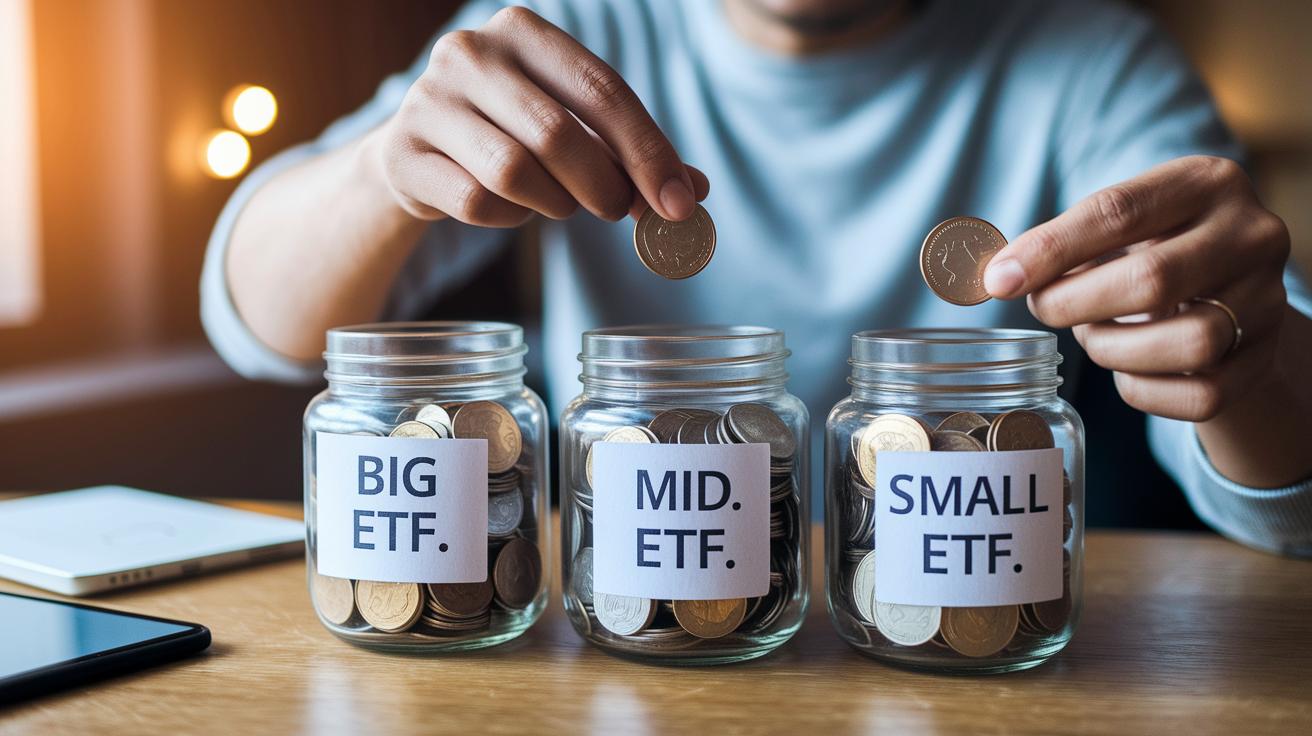
Start by setting your money goals and figuring out how much risk you’re comfortable with. It’s a bit like choosing a jar for your coins, some jars let you take a little risk, while others are all about safety. When you know what you want, every move in your investing journey becomes easier.
Next, decide how to spread your money among large, mid, and small value ETFs. Picture sorting coins into jars: one for big companies, one for medium ones, and another for smaller companies. This way, you balance risk and grab chances in different parts of the market.
Here’s a simple roadmap:
- Set clear money goals and know your comfort level with risk.
- Divide your funds among the large-cap, mid-cap, and small-cap value ETFs that match your goals.
- Open a brokerage or fund account that lets you pick the ETFs you like.
- Place your first orders, just like filling your jars with the right mix of coins.
- Plan to check and rebalance your portfolio regularly, say every six months, to stay on track.
- Keep a close eye on your investments, and if big changes come up, whether in the market or in your life, adjust your mix accordingly.
Taking these steps one at a time helps you build a balanced portfolio with steady, thoughtful gains.
Final Words
In the action, we've explored how value index investing blends value-driven stock selection with a simple, passive strategy.
This article looked at core principles, compared active and index methods, and even shared clear steps using real ETF examples.
Each segment aimed to show you how to set up a stable, diversified portfolio while keeping costs low.
Keep this clear, straightforward guide in mind as you make smart choices and cultivate a more confident financial future.
FAQ
What is a value index investing strategy?
The value index investing strategy combines buying stocks priced below their true worth with passive index tracking. This approach helps capture undervalued assets while keeping fees low and offering broad market exposure.
What is a value index?
The value index represents a group of companies trading at lower valuations. It blends value investing—seeking companies priced below inherent value—with passive index methods for diversified, low-cost market exposure.
How does value index investing work with the S&P 500?
Value index investing with the S&P 500 applies valuation filters to the broad market index. This method targets undervalued companies within the benchmark, aiming to capture potential upside while maintaining diversified exposure.
How do Fidelity value index funds perform?
Fidelity value index funds use a passive strategy that mirrors market benchmarks while focusing on valuation measures. They balance risk and growth by investing in companies deemed undervalued and provide an efficient pathway for long-term investment goals.
How does value investing compare to growth investing?
Value investing centers on purchasing stocks trading below their true worth, while growth investing targets companies with high future expansion potential. Each strategy offers a different risk-reward dynamic based on investor goals.
What is a Value Index ETF?
A Value Index ETF is an exchange-traded fund that tracks a value index. It uses passive management and valuation filters to offer low-cost access to a diversified portfolio of potentially undervalued stocks.
How risky is VT ETF?
The VT ETF offers global diversification through exposure to both developed and emerging markets. Its broad, well-diversified structure generally keeps risk moderate, though all market investments are subject to potential fluctuations.
What if I invest $1000 a month for 5 years?
Investing $1,000 monthly for 5 years builds your portfolio steadily through dollar-cost averaging. This regular investment method can help smooth out market volatility and potentially boost long-term growth.
Are value index funds good?
Value index funds are good for investors seeking a low-cost, hands-off approach to capture undervalued stocks. They provide diversification across various market segments while emphasizing long-term growth and risk management.
How can I use various Fidelity index funds to build my portfolio?
Using Fidelity index funds—including large cap, mid cap, international, and S&P 500 options—lets you create a well-rounded portfolio. This mix covers different market segments and risk levels, aligning with long-term financial objectives.