

Are you fed up with payments that feel like heavy chains? Picture settling your bill for much less than you ever imagined, with a weight off your shoulders every time a new bill arrives.
Debt settlement lets you chat with your creditors to see if you can lower what you owe while avoiding extra fees. It could be your chance to break free from collections and rising interest that make you feel stuck.
In this chat, we'll explore how slashing your debt might give you more freedom and clear the road to a healthier financial future.
Debt settlement Benefits: Solve Your Financial Woes
Debt settlement is all about working with your creditors, either on your own or by using a helper, to agree on a one-time payment that’s less than what you originally owe. With this approach, you might end up paying only a small slice of your debt, plus some fees that can run anywhere from $500 to $3,000 or more. One person even shared that they managed to settle with their credit card company by paying only about 40% of their balance, which felt like a huge relief.
You begin the process by stopping your regular payments and putting that money into a special settlement account. This account builds up funds that you use to make offers to your creditors. Before you reach out, you check your statements or credit report to know exactly how much you owe. Sometimes, you might start with a small offer, maybe even just $10, to open the conversation for bigger negotiations later on.
There are some clear benefits to this approach. Settling your debt can help you pay it off faster and can save you from collections, charge-offs, lawsuits, or even bankruptcy. It can lower the overall balance you owe, giving you a quicker sense of relief. Plus, settling early might stop extra fees and interest from piling up and making your debt even harder to handle.
But there are a few things to keep in mind. Stopping your regular payments, even though it’s needed for settlement, can hurt your credit score because of late marks and collections. Also, creditors are not required to accept your settlement offer. And if they forgive more than $600 of your debt, you might have to pay taxes on that forgiven amount with a Form 1099-C from the IRS.
Comparing Debt Settlement to Other Consumer Debt Relief Options
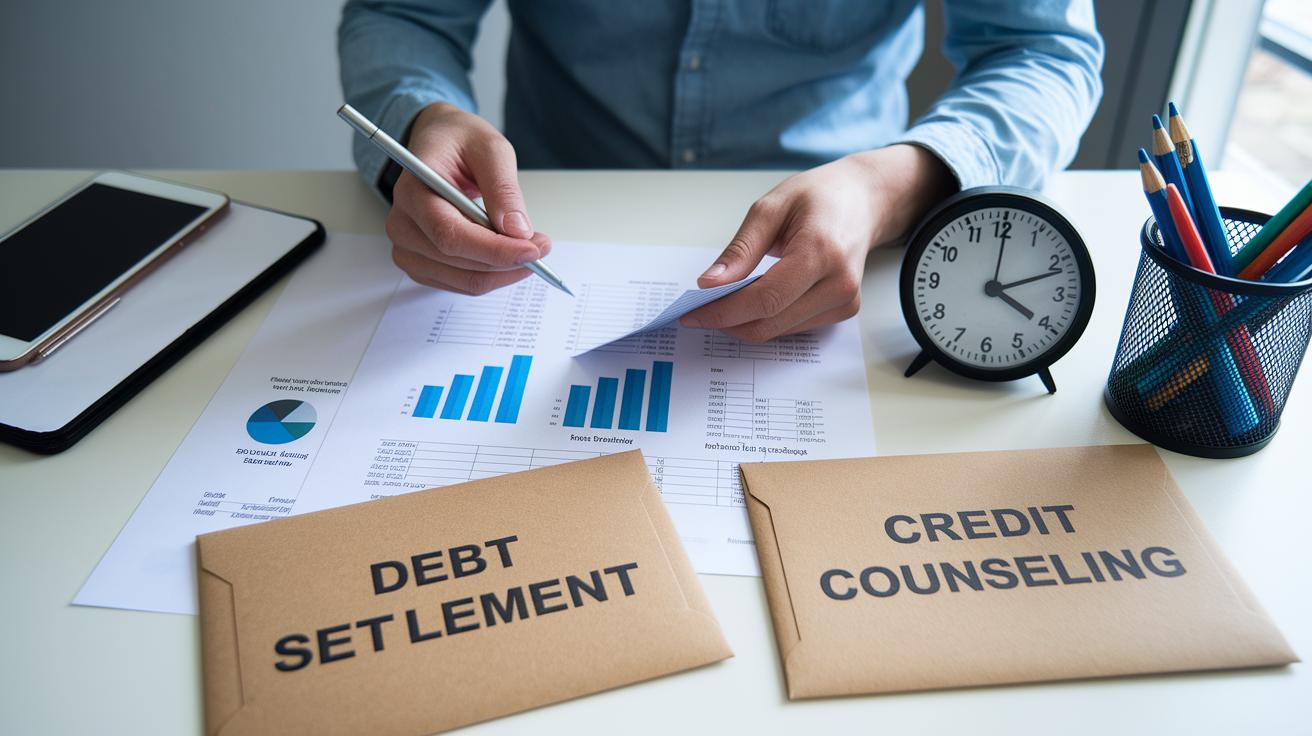
Debt settlement works differently from other ways to tackle debt. With debt settlement, you negotiate a one-time payment that’s lower than the full balance. But while you arrange this, you stop your regular payments, which can lower your credit score because of late payments.
Credit counseling is offered by nonprofits and helps you create a budget along with a clear plan to manage your debt. These programs typically last 3 to 5 years and lower your monthly payments, yet you still pay off the entire original amount. It’s like paying your full debt, just on more manageable terms.
Debt consolidation uses a personal loan. These loans come with interest rates that can range from about 7% to almost 36% and could be for amounts between $1,000 and $250,000 over terms from 12 to 120 months. You often get the money fast, sometimes in just three days, but it means you add another monthly bill to handle.
Balance transfers might help manage high-interest credit card debt if the fees and rates work in your favor. Meanwhile, bankruptcy is an option when you have few assets left. Bankruptcy damages your credit deeply, yet sometimes it’s the best route when nothing else will do.
Assessing Debt Settlement Services: Fees, Reputation, and Performance
When you’re looking into debt settlement options, start by checking the fee details. Some companies charge a slice of your forgiven debt, usually between 15% and 25%, or they might use a flat fee that can range from $500 to $3,000. I once heard a client say, “I asked, ‘How is this fee set?’ and they broke down each part of the fee very clearly.”
A trustworthy firm will lay all the facts out on its website. They share fee schedules, let you know that settlements often take about 24 to 48 months, and provide real success numbers. This kind of openness makes it easy for you to compare your choices and dodge any surprises later on.
It’s also smart to check the company’s background. Look into their Better Business Bureau ratings, state licenses, or even nonprofit credentials if they have them. Think of it like reading a restaurant’s hygiene rating before you try a new dish, these checks help you feel confident you’re picking a service you can trust.
Some companies even include a review of attorney representation as part of their service. Attorney-led settlements may work better under state laws, but they typically come with higher fees. So, it’s important to weigh the extra cost against the benefits.
- Review fee structures carefully.
- Ask for clear, detailed fee explanations.
- Do thorough background checks on these companies.
By staying informed and using these simple tips, you can pick a debt settlement service that really fits your needs.
Step-by-Step Guide to Settling Your Debt: DIY and Professional Strategies

Start by looking at your everyday expenses, rent, food, utilities, to figure out how much cash you can dedicate to paying off debt. It’s like setting aside a few coins each time you shop while keeping most of your money ready for bigger bills.
Next, check your newest creditor statements or your credit report to see your exact balances. Any money you stop spending on regular payments should go straight into one special debt settlement account. Think of it like putting cash into a jar labeled just for settling debt.
When you begin talking to your creditors, kick off with small offers on the lesser amounts. For instance, you might say, "I offered $10 on a small balance, and that helped move negotiations in my favor." Make sure you write down every counteroffer to keep track of progress.
You can also try the debt-snowball method. This means paying off the smallest debts first. It builds momentum and boosts your confidence as you go along.
And if the talks get stuck, chatting with a financial coach or an advisor can give you new ideas to try out without redoing old steps.
| Step | Description |
|---|---|
| 1 | Review your living essentials to see how much you can set aside. |
| 2 | Check creditor statements or your credit report for exact balances. |
| 3 | Place any saved money into a dedicated debt settlement account. |
| 4 | Start negotiations with small, documented offers. |
| 5 | Use the debt-snowball method to gain momentum. |
| 6 | If needed, get advice from a financial coach or independent advisor. |
Impact of Debt Settlement on Credit Scores and Post-Resolution Recovery
When you stop making your usual payments for debt settlement, your credit report may show late payments, collections, or even charge-offs. This can drop your credit score by a big chunk, often by 85 to 160 points or more. Plus, if more than $600 of your debt is forgiven, the IRS wants you to report it on Form 1099-C, which counts as income for that year.
But don’t worry, the hit to your credit isn’t permanent. Over time, you can work hard to rebuild what was lost. Start by checking your credit reports often to catch any mistakes and dispute what isn’t right. You might also try a secured credit card, which is a type of card backed by money you put down, to show lenders you can manage credit responsibly. Even considering a credit-builder loan, which is made just to help boost your score, can be a smart move. And remember, making every future payment on time slowly rebuilds your positive history.
Think of rebuilding your credit like tending to a garden. Every on-time payment is like planting a seed that, with care, grows into a stronger, healthier financial future. With some effort, a mix of smart credit choices, and steady habits, you can mend your credit score, even after a big drop from settling debt.
For more ideas and tips on bouncing back, check out guides on boosting your credit score or explore detailed credit analysis resources.
Final Words
In the action, we explored how debt settlement works, from negotiating lower payments to understanding potential fees and credit impacts. The post broke down steps for both DIY and professional strategies, comparing methods like credit counseling and bankruptcy along the way. It also stressed the need for clear fee structures and trustworthy services when choosing a partner. This clear guide gives you practical tips and honest risk versus reward evaluation. Keep your focus on smart moves and steady progress toward a brighter, financially resilient future.
FAQ
What are debt settlement companies?
The debt settlement companies help negotiate with creditors to settle a debt for less than the full balance by offering a lump-sum payment, often involving third-party assistance.
What are the pros and cons of debt settlement?
The debt settlement approach offers reduced total payments and quicker relief but brings risks such as fees, drop in credit scores, and potential tax liabilities from forgiven debt.
How do debt settlement programs work?
The debt settlement programs work by stopping regular payments and gathering funds into a dedicated account, which are then used to negotiate a lower lump-sum settlement with creditors.
What is the difference between debt settlement and debt consolidation?
The debt settlement method works by negotiating to lower the amount owed, whereas debt consolidation combines multiple debts into one loan with a set monthly payment, making repayment simpler.
How does the debt settlement process work?
The debt settlement process follows steps starting with determining available funds, stopping payments, then negotiating offers directly with creditors, and finally seeking expert advice if negotiations stall.
Is debt settlement a good idea?
The debt settlement idea offers faster relief than other options but can hurt credit significantly, incur fees, and lead to tax impacts, so it fits only specific financial circumstances.
What is the 7 7 7 rule for debt collectors?
The 7 7 7 rule for debt collectors means that once you request a validation, they have seven days to respond, helping ensure that the debt information is accurate and timely.
What two types of debts cannot be erased through debt settlement?
The method commonly seen in debt settlement typically cannot erase federal student loans and tax debts since these obligations usually have special federal or legal protections.
What should I look for in the best debt settlement companies?
The best debt settlement companies boast transparent fee structures, solid accreditation from reliable sources like the BBB, and clear performance data, ensuring you work with a trustworthy firm.
How do I access resources like National Debt Relief login and free government debt relief programs?
The National Debt Relief login allows online account management, and free government debt relief programs offer nonprofit counseling to help manage and resolve debt without hefty fees.
What options are available beyond traditional debt relief programs?
Beyond standard debt relief programs, you can consider consolidation loans, credit counseling, balance transfers, or other personalized solutions that better fit your financial situation.