

Have you ever thought your credit score might be the secret to better loan deals? Think of it as a report card for your money habits, a quick look that tells lenders if you're a safe bet or a risk. This guide walks you through credit score ranges, from low to high, in simple, easy steps. Stick with us to see how each range can change your loan terms and learn a few tips to boost your credit. It's a straightforward plan that can help you borrow smarter and build a brighter financial future.
Credit Score Ranges Explained: From Poor to Excellent
Think of your credit score, which usually falls between 300 and 850, as a report card for your money habits. Lenders check this score to see how risky it might be to lend you cash. A low score tells them you might be a risk, and a high score shows you're trustworthy. Knowing these levels can help you improve how much you can borrow.
| Range | Classification | Implications |
|---|---|---|
| 300–579 | Poor | Lenders see this as risky, so you may get limited credit with tougher terms. |
| 580–669 | Fair | You can still borrow, but expect higher interest rates and more restrictions. |
| 670–739 | Good | This score shows reliability, often leading to better credit terms. |
| 740–799 | Very Good | Being in this bracket means lenders see low risk, which brings competitive offers. |
| 800–850 | Excellent | Excellent scores open the door to the best deals and low interest rates. |
Understanding where you stand on this scale can really help you make smarter borrowing choices. Whether you're trying to climb from fair to good or already have an excellent score, each level impacts your loan rates and credit terms. It’s like having a roadmap to boost your credit, making it easier to get better loan deals and enjoy long-term financial perks.
FICO vs VantageScore Credit Score Ranges
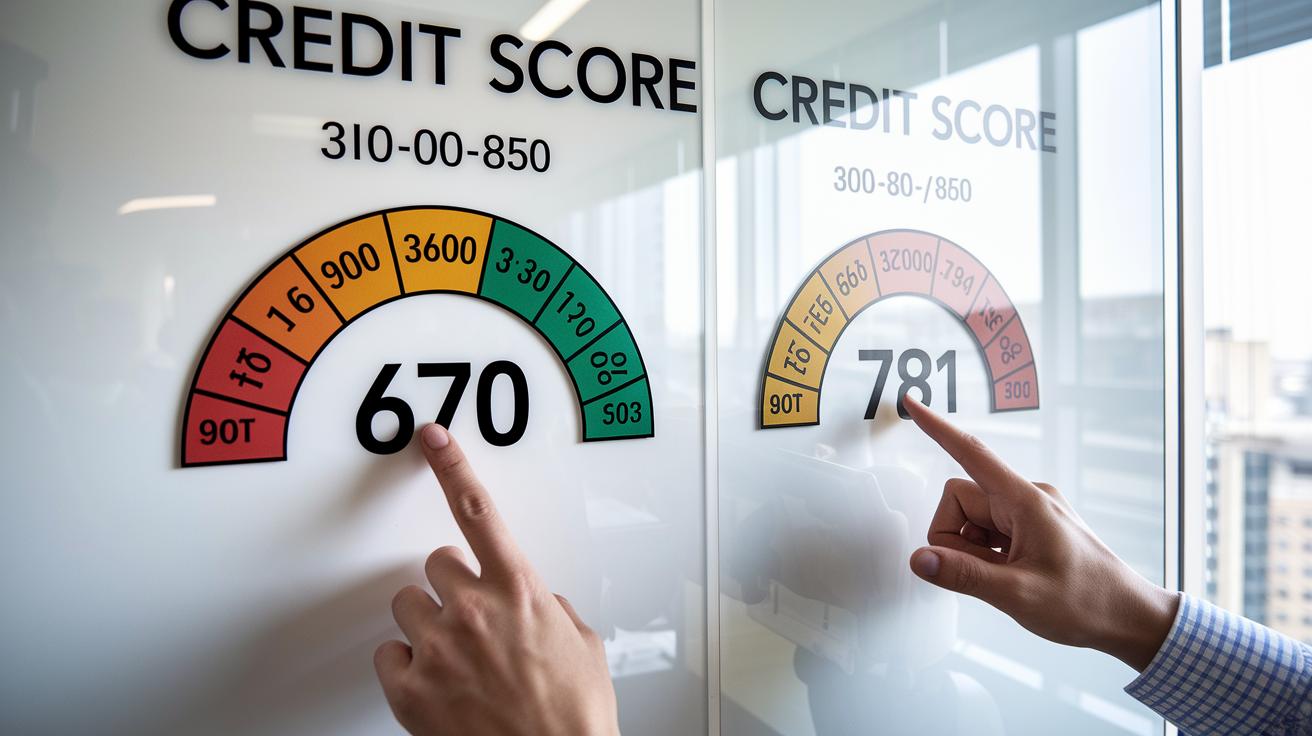
Both FICO and VantageScore use a credit score range from 300 to 850. That means they use the same number line to show how well you’re handling your credit. They look at things like your payment history, how much of your credit you’re using, and how long you’ve had your accounts. Knowing this common scale helps you see where you stand as a borrower.
FICO considers a score between 670 and 739 as good, 740 to 799 as very good, and 800 to 850 as excellent. VantageScore 3.0, on the other hand, sees scores from 661 to 780 as good and 781 to 850 as excellent. Sure, the ranges are pretty close, but even small differences can impact the loans you might get and the interest rates offered. Imagine it like comparing two measuring tapes, the numbers might be almost the same, yet a few inches can change the outcome.
Lenders often choose one scoring model over the other based on the type of loan they’re offering. So, keeping an eye on both scores gives you a fuller picture of your financial health. It’s like having two trusted friends explain your credit story, helping you feel more confident when you step into the application process.
Key Factors Affecting Credit Score Ranges
Your credit score is built from a mix of small but important parts, each telling a bit of your financial story. Think of it like baking a cake: payment history, credit use, how long you've had credit, the mix of credit types, and new credit checks all add their own flavor.
Payment history is the big piece here because it shows if you pay your bills on time. Credit utilization tells you how much of your available credit you use, try to keep it below 30% for the best results. How long you’ve had credit shows your experience with borrowing, while having different types of credit (like loans, credit cards, and mortgages) shows you can handle various responsibilities. Plus, each time you apply for new credit, it can cause a small, short-term dip in your score.
When you manage each part well, you build a strong credit profile. Paying bills on time, keeping your credit use low, and having a good mix can really set you up for success. Imagine organizing coins in a jar, each coin is a good habit, and together, they make your credit score stronger over time.
How Credit Score Ranges Influence Loan and Mortgage Rates

Your credit score isn’t just a number; it tells lenders how risky you might be. With a lower score, you might face higher interest rates or even a declined loan. Lenders see lower scores as a sign of bigger risk, which means you could get tougher borrowing terms. They use these score brackets as a guide when putting together loan offers.
When it comes to home loans, having a good or excellent score really pays off. Imagine your credit score as a ticket to lower rates, a higher score often leads to a lower APR, which can shrink your monthly payments. Even a little boost in your score can make a big difference over time.
If you’re looking for an auto loan, the benefits continue. Higher credit scores can unlock special deals like zero-percent interest or manufacturer incentives. In simple terms, by working on your credit, you not only lower your interest costs on a car but you also save money on other major loans, leaving more cash for daily expenses.
Strategies to Move Up in Credit Score Ranges
Start by setting up a simple routine to manage your credit. Paying your bills on time is like building a strong base in a little money jar, you add a coin with every punctual payment. Keeping your balance low (ideally below 30% of your credit limit) shows lenders that you are careful with your borrowing. It helps to check your credit report often so you can catch any mistakes that might pull your score down. Even small things like automatic payments or keeping an easy budget can really help you out.
If you’re looking to boost your FICO score, try some focused techniques. For example, becoming an authorized user on a family member’s credit card or taking out a credit-builder loan can add history to your report. Sometimes paying off older accounts might lower the average age of your credit a bit, but the benefits in the long run are worth it. For more tips, check out this guide on how to raise my credit score. Also, lowering your overall debt and keeping a mix of different credit types balanced can really open up more options.
Remember, building a better credit score takes time. Keep an eye on your progress and let each good habit get its effect on your report. Adjust your plan when needed and enjoy your small wins along the way. Every good step counts toward a stronger credit future and better chances when borrowing money.
Final Words
In the action, we showed how rating bands work, from the lower levels posing challenges to the top tiers offering better rates. We broke down the differences between scoring models and shared how key factors like payment habits and credit mix influence your score. We also offered smart steps you can take to move up the ladder. Embracing these insights on credit score ranges puts you on track for a more secure and empowered financial future.
FAQ
What does the credit score range chart show?
The credit score range chart shows tiers from 300 to 850, breaking scores into categories like Poor, Fair, Good, Very Good, and Excellent to help borrowers understand credit risk.
Is a 900 credit score possible?
The credit score scale stops at 850, so a score of 900 isn’t feasible under standard scoring models used by most lenders.
What are credit score ranges by age and what do they mean?
Credit score ranges by age depend on credit history length. Younger borrowers might show lower scores due to a shorter history, while older individuals often enjoy higher scores from years of credit behavior.
How do discussions on Reddit explain credit score ranges?
Discussions on Reddit about credit score ranges share personal experiences and tips, helping users understand how to move from lower to higher tiers through daily credit management.
What is a good credit score to buy a house?
A good credit score for buying a house is typically in the Good to Excellent range (around 670 or above), which helps secure competitive mortgage rates and favorable loan terms.
What credit score ranges affect mortgage terms?
Mortgage lenders use credit score ranges to assess risk; borrowers with Excellent scores (800–850) get the lowest rates, while lower scores may lead to higher rates or additional requirements.
How does VantageScore define credit score ranges?
VantageScore uses a 300–850 scale, often classifying scores as Good (661–780) and Excellent (781–850), which helps borrowers understand where they stand under this model.
How does Credit Karma present credit score ranges?
Credit Karma presents credit score ranges similar to major models, categorizing scores into tiers so users can gauge their credit health and understand potential credit offers.
What are the five ranges of credit scores?
The five ranges are typically Poor, Fair, Good, Very Good, and Excellent, each representing different levels of credit risk and influencing lending terms.
How common is a 700 credit score?
A 700 credit score is relatively common, marking a level of creditworthiness that offers access to competitive lending options and terms for various financial products.