
Ever wondered if a few small tweaks in your spending could change your life? Instead of thinking budgets are boring, imagine them as a simple guide to help you reach big dreams.
When you know what you have left after taxes, you can see where each dollar goes. Even writing down the money you spend on coffee may show you a way to save for a rainy day.
Today, we'll chat about easy budgeting ideas and show how smart money moves can bring you closer to your financial goals.
Achieving Financial Goals with Budgeting Strategies
First, know that net income is the money you take home after taxes and retirement contributions. It’s like the cash left in your wallet after a long day at work, this is the amount you can truly use each month. Starting with what you have in hand gives you a clear picture for planning every expense.
Next, jot down your spending each month. Take a few weeks to write down things like your morning coffee or little snacks. You might be surprised how these small amounts add up! Writing them down helps you see where your money goes and points out areas where you can save even a bit more.
Finally, match your budgeting plan with your money goals. Maybe you’re saving for a rainy day, paying off a loan, or investing in personal growth. Adjust your plan as your spending habits change so every decision moves you closer to your big dreams. This way, each step you take with your budget becomes a tool to build a brighter future.
Comparing Zero-Based, Incremental, and Proportional Budgeting Strategies
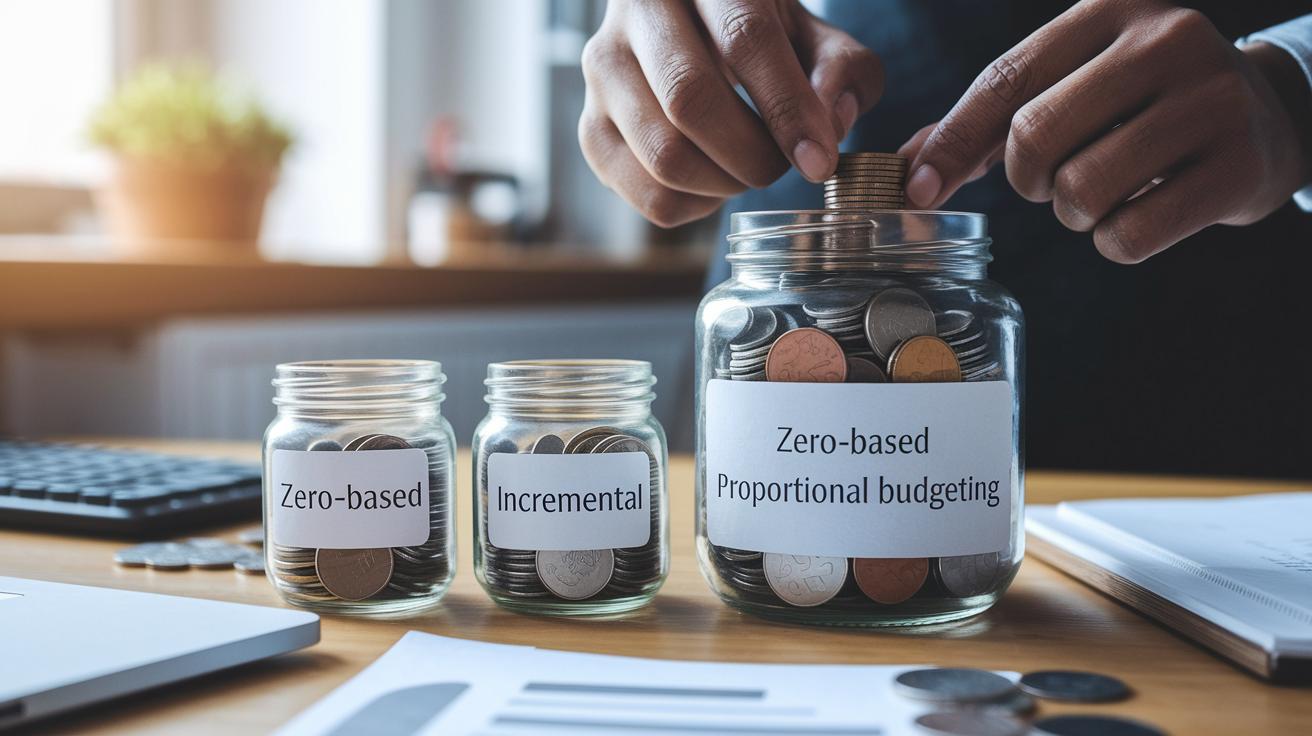
Choosing the right budgeting method can really change how an organization handles its money. It’s like arranging coins in a well-worn jar, you get to see exactly where every dollar goes. Each method offers a unique way to manage your spending.
Zero-based budgeting starts fresh every period. That means you begin from zero and justify every single expense all over again. Incremental budgeting, however, builds on last period’s numbers by making small adjustments as needed. And then there’s proportional budgeting, where you set aside fixed percentages of your total revenue to cover different expenses. For instance, a zero based budgeting example shows how digging into every cost can pinpoint waste, while other methods work well when spending patterns are steady or income keeps changing.
| Strategy | How It Works | Best For | Pros | Cons |
|---|---|---|---|---|
| Zero-Based | Starts fresh each period; every expense is questioned from the start. | Those needing tight cost control | Thorough expense reviews; helps cut wasteBudgeting Strategies Shine: Smart Money Tips
Keeping a daily watch on your spending is like counting every coin in your pocket. When you jot down what you spend each day, from that early coffee to a quick snack, you see exactly where your money is going. This hands-on approach helps you spot little leaks before they turn into big problems. It’s a simple, smart way to make every dollar count toward your money goals.
As your spending shifts, it's totally okay to tweak your budget categories. Maybe you start by setting aside a bit for dining out but then realize your subscriptions need more attention. Budgeting isn’t a set-it-and-forget-it deal. Instead, it’s a journey where you fine-tune your system every few months, keeping your everyday expenses balanced while steadily building your financial future. Business Budgeting Tactics to Optimize Small Enterprise Finances
To start managing your business money, first predict your earnings. It’s a bit like making a shopping list before you head to the store. List the money you expect and separate your bills into two simple groups: fixed expenses (like rent or loan payments that never change) and variable expenses (like supplies or utilities that might go up or down). This clear look makes it easier to see where your money is going and even spot some areas where you might cut costs. For a new business, picking the right way to budget makes a big difference. When cash is tight, choose a plan that fits your current needs. Some ideas focus on spending only on the essentials, while others use easy tools like spreadsheets or special software to track costs. Digital tools, like small business expense management software, can even record your bills automatically. This means less time spent on tracking money and more time to focus on growing your business. It’s smart to check your budget every month. Take a little time to review your numbers, compare what you planned with what actually happened, and adjust as needed. This regular check helps you catch any surprises early on. By tuning your budget often, you can keep it in line with your business goals and stay flexible when things change. Advanced Budgeting Strategies and Best Practices for Optimized ResultsVariance analysis is a handy way to see where your spending isn’t matching your plan. In plain terms, you compare what you expected to spend with what you actually did. For example, if you notice you spent more on supplies this month, it might be a good idea to ask yourself, "Why did this happen?" Looking at these differences helps you fine-tune your budget so every dollar counts. Rolling forecasts add a fresh perspective. Instead of sticking tight to a fixed plan, you update your spending estimates as you learn new things. Imagine you set a budget at the start of the year, then tweak it each month based on real results. This way, your financial plan stays flexible and adapts to your changing needs. Adding performance metrics into your budgeting process makes it easier to track progress. Simple measures, like spending ratios, work like a dashboard for your finances. They show you how well your budget is doing and highlight areas that might need a closer look or a bit of adjusting. Regular reviews are key. Try setting aside time each month or quarter to go over your budget details. During these sessions, check both your current spending and your future projections. If you find, say, that too much is going toward entertainment, consider reducing that expense and moving those funds to savings. Keeping up with these reviews helps you stay in control of your finances. Budgeting Strategies Shine: Smart Money Tips
Budgeting doesn't have to be complicated. Think of it like sorting coins into little jars. One traditional trick is the 50/30/20 rule, where you split your money into three parts for needs, wants, and savings. Another old-school idea is the envelope system. With this, you put cash into different envelopes, which makes it easier to stick to your plan and avoid overspending. Today, technology makes budgeting even simpler. There are easy-to-use spreadsheet templates that add up your numbers and even highlight any unusual spending. Some templates can import your credit card transactions so you get a quick look at where your money is going. Plus, mobile apps give you real-time updates and handy alerts, so you spend less time calculating and more time enjoying your progress. Final WordsIn the action, you explored how budgeting strategies break down your income and expenses so that every dollar has a purpose. You saw how methods like zero-based, incremental, and proportional budgeting can match different needs. The piece also walked through personal and business tactics, offering practical tips for daily control and long-term growth. Embracing these budgeting strategies can help set a clear path to financial confidence and a brighter future. FAQQ: What budgeting strategies work well for students?A: Budgeting strategies for students focus on tracking income and expenses, setting spending limits, and using simple tools like envelopes or apps to manage money effectively. Q: What does the 50/30/20 rule mean in budgeting?A: The 50/30/20 rule means allocating 50% of income to needs, 30% to wants, and 20% to savings or debt repayment, offering a simple way to balance money priorities. Q: What are some examples of budgeting strategies?A: Budgeting strategy examples include using the envelope system, the 50/30/20 method, and zero-based budgeting—all designed to help track income, control expenses, and achieve financial goals. Q: What budgeting approaches are used in business settings?A: Business budgeting strategies focus on forecasting revenue, categorizing fixed and variable costs, and comparing actual spending to planned budgets, helping companies maintain stable finances. Q: What is a budgeting strategies PDF?A: A budgeting strategies PDF is a downloadable guide featuring charts, templates, and step-by-step instructions to help explain and apply budgeting methods for better financial management. Q: How do people discuss budgeting strategies on Reddit?A: On Reddit, budgeting strategies are shared through personal experiences and tips where community members exchange ideas, ask questions, and learn from one another’s practical money management advice. Q: What budgeting strategies are recommended for families?A: Family budgeting strategies emphasize teamwork, clear goal-setting, and shared tracking of expenses to maintain balanced finances and meet the needs of all family members. Q: What is the 70/20/10 rule in money management?A: The 70/20/10 rule means allocating 70% of income for living expenses, 20% for savings, and 10% for debt repayment, making it easier to structure spending and save money. Q: What are the most common budgeting methods and what are the four main types?A: The most common methods include zero-based budgeting, the envelope system, the 50/30/20 rule, and incremental budgeting. The four main types can be seen as zero-based, incremental, proportional, and envelope approaches, each offering a unique way to distribute income. Popular Categories   Previous article  Next article  |