
Have you ever thought that a small-town trade is a lot like big deals between entire countries?
Global markets work like a friendly circle where nations swap goods, money, and skills, just like neighbors sharing a fresh batch of homemade treats. Imagine selling garden tomatoes to someone across town; that simple act can brighten our local economy.
When funds or talent come from another place, they can help a community bounce back from tough times. In this chat, we'll break down what global markets really mean and paint a clear picture of how our world stays connected.
Global Markets Definition: Clear, Concise Insight
Global markets are like a big, friendly network where countries trade goods, money, and talent without too many barriers. It’s a system that lets nations share what they have and learn from each other, kind of like swapping homemade treats with a neighbor. Imagine selling your garden tomatoes to someone in another country. That small act is a glimpse into how global trade works every day.
This worldwide setup helps even out ups and downs in individual economies. When a country uses money or skills from outside, it can soften the impact of local troubles. Picture a small business using funds from abroad to create new products. That fresh burst of energy can bring stability and spark new ideas.
Here are a few ways global markets make a difference:
| What Happens | How It Works |
|---|---|
| Trading goods and services | Products and ideas move freely between countries |
| Flows of money | Loans and investments fund projects across borders |
| Sharing skills | Workers bring their unique talents to new places |
| Money sent home | Remittances help support families and communities |
In truth, global markets form the backbone of international economics. They mix trade, finance, and labor into one dynamic system that everyone can benefit from, making the whole world a bit smaller and more connected.
Key Components of Global Market Systems
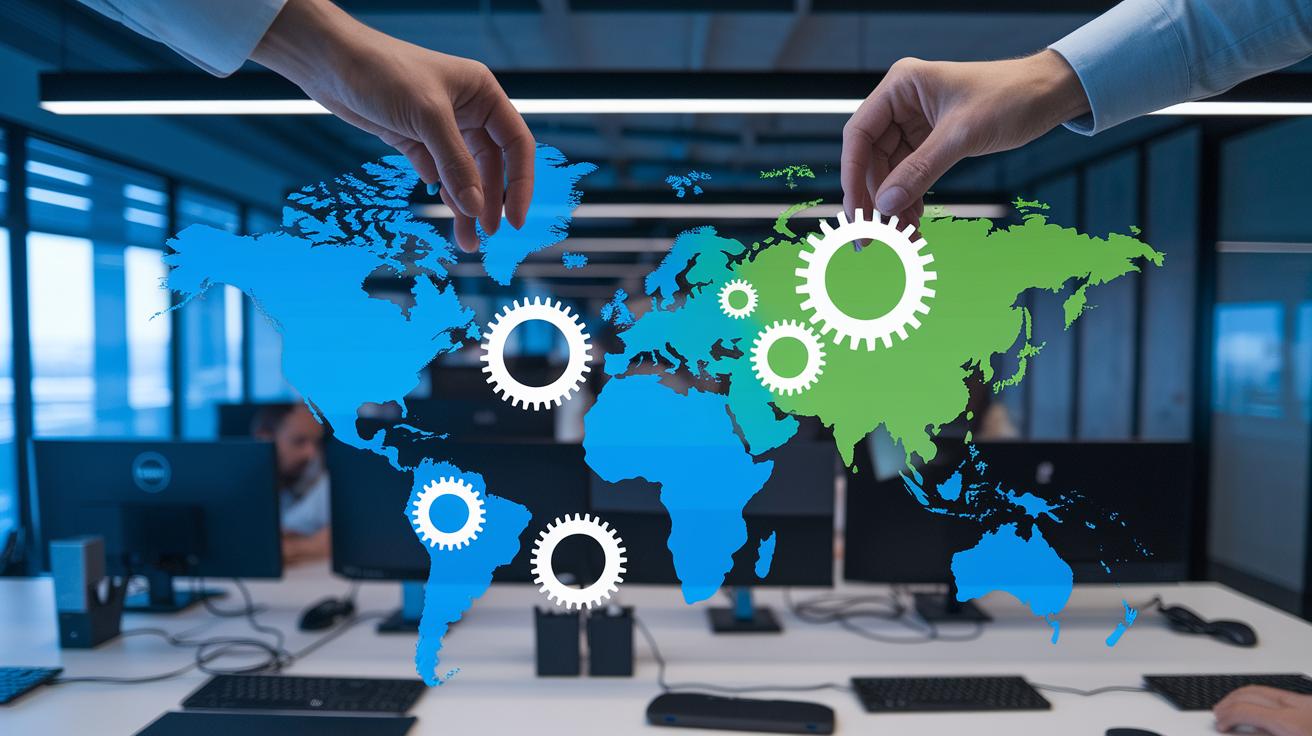
Global market systems connect economies in a truly seamless way. They let goods, money, labor, and digital transactions flow across borders like different parts of a well-tuned machine. It’s a bit like watching gears click together perfectly, ensuring every country reaps the rewards of shared resources.
At the heart of these systems are a few simple, everyday elements: cross-border trade, international capital movements, workforce mobility, and modern digital platforms. Each part plays its role, much like a helpful friend pitching in, to keep everything running smoothly and balance resources across the globe.
| Component | Description |
|---|---|
| Trade Across Borders | This means buying and selling goods and services around the world, linking consumers and producers in a friendly, global exchange. |
| Capital Movements | This involves money traveling across countries for investments and loans. It’s like spreading financial cheer where it’s needed most. |
| Workforce Mobility | This moves skills and labor to different regions. Think of it as sharing talent so that each area gets the help it needs. |
| Digital Platforms | These use technology to make transactions and share information instantly. It’s the online bridge that connects all parts of our global economy. |
Together, these elements create an integrated ecosystem where trade supports capital inflows and opens up jobs, while digital platforms tie everything together. When markets work in harmony, they help spread risks and opportunities evenly, much like a well-oiled engine that keeps everything moving smoothly. In short, this teamwork makes the global market robust and ready to evolve with changing times.
Historical Evolution of Global Markets
Trade started as simple exchanges between neighbors and slowly evolved into long journeys, like traveling along the Silk Road or the sea routes of the 15th century. Back then, merchants crisscrossed the lands and oceans, sharing goods and sparking connections that stretched across continents.
Then came the Industrial Revolution in the 1800s. It changed everything by making it easier for countries to trade goods, ideas, and money. New ways to travel, trains, ships, and even early roads, helped move bigger shipments to more diverse markets. After the hardships of World War II, groups like the IMF and WTO helped countries work together more closely, which strengthened these new bonds.
As time marched on, the digital age transformed how we do business. With faster communication and better recordkeeping, transactions began happening quicker and over larger distances than ever before.
Today in the 21st century, technology and more relaxed policies are reshaping global markets again. Digital platforms now make it simple for businesses to reach customers around the world. In essence, old trade methods and modern innovations work side by side, creating the strong, interconnected global market we experience today.
Classification and Types within Global Markets

Global markets are like different neighborhoods, each with its own vibe. You have mature markets, which are steady and well-established, much like a familiar town where everyone knows each other. Then there are emerging markets that are buzzing with energy, imagine a neighborhood rapidly transforming as new businesses open their doors. And finally, frontier markets, which are just starting to shine, similar to a new startup full of promise and fresh ideas.
Another important piece is the consumer segment. This is all about the everyday demand for goods and services. Think of it like organizing a local fair where every taste matters. Whether it's dining out, gadgets, or clothes, consumers help keep the economy lively and fun.
Institutional Markets
Institutional markets are dominated by big players like banks and government bodies. These markets handle things like sovereign bonds (loans taken by a country) and interbank lending (banks loaning money to each other). They work under strict rules, kind of like a well-coordinated team making sure every move is planned and safe.
Alternative Markets
Alternative markets are the wild cards of the financial world. They include non-traditional investments like commodities (basic goods like oil or gold), derivatives (financial contracts whose value comes from other things), and digital assets like cryptocurrencies. If you’re looking for something different from the usual stocks and bonds, these markets offer a fresh mix of opportunities and risks, much like experimenting with a new recipe when you’re in the mood for something exciting.
Trends and Dynamics Shaping Global Markets
Digital trading platforms and fintech tools are shaking up the global scene. They let investors and businesses get funds fast and with ease. Imagine tapping your smartphone and funding a new project in seconds. It’s like breaking free from old delays and welcoming fresh opportunities.
Sustainability and ESG, think of it as a way to check if a company cares about people and the planet, are also shifting where money flows. More investors now back companies that balance strong profits with a positive social and environmental impact. Picture a business that grows financially while also reducing its carbon footprint. Companies are now blending profit with purpose every day.
Geopolitical events and market ups and downs add another twist. Trade disputes, sanctions, or even a sudden pandemic can send ripples through capital flows. Ever wonder how a quick political shift might make you rethink your financial moves? This kind of uncertainty shows us that staying nimble is key for both companies and investors in today’s ever-changing global market.
Applying Global Market Analysis in Strategic Decisions

Businesses today work in a world where borders seem to fade and change is constant. When companies look at trends around the globe, they get a clearer picture of what customers need, the rules they must follow, and how competitors are acting. This simple insight lets them shape plans that fit local tastes and conditions, whether they’re deciding on prices or planning for risks. It’s like hearing a quiet signal before a big change hits.
There are some tried and true ways to break down these global patterns. Many firms use clear tools that look at political, economic, social, environmental, and legal factors (that is, the things that shape how a country or region works). They also peek at how well they compare to others in the field, spotting both strengths and weak spots. This kind of analysis mixes the local details with world trends, making strategic decisions more grounded and clear.
Analytic Frameworks
Analytic frameworks bring together methods like PESTEL, which checks out Political, Economic, Social, Environmental, and Legal factors, and SWOT analysis, which looks at Strengths, Weaknesses, Opportunities, and Threats while adding a look at global risks. This approach breaks markets down by region, industry, and even age groups to show where the good chances and hidden problems are. Using these tools helps companies fine-tune their plans, making sure that everything from budget choices to launching new products fits well with the big picture of the global market.
Global Markets in Action: Real-World Examples
Real-world examples make global market ideas easy to grasp. They show how famous brands adjust their plans for local tastes while keeping their international style. It’s like watching a puzzle come together, piece by piece.
Take Coca-Cola, for example. The company tweaks its packaging and messages so they fit local traditions and colors. This small change helps people feel connected to the brand in a warm, personal way.
Digital investment platforms work similarly. They simplify buying and selling stocks and bonds across borders in real time. Imagine a digital marketplace that never closes, always ready to help you invest smoothly, no matter where you are.
These examples remind us that mixing local flair with global ambition is key. Understanding everyday local details and using smart digital tools are both important to play in the big world market.
Final Words
In the action, we walked through the global markets definition, highlighting key themes like trade flows, capital movements, and digital trading. We explored historical shifts, basic market types, and current trends that shape these connections.
This quick recap shows how everyday financial decisions tie back to these clear, simple ideas. Embracing this clarity helps cut through complex terms and lays a solid groundwork for making smart money moves. Let's move forward with optimism and practical insight.
FAQ
What is the definition of global markets in economics and business?
The global market means the system where countries exchange goods, services, and capital without borders. It covers exports, imports, investments, and even labor movements.
What are global markets in banking and finance?
Global markets in banking and finance refer to the international systems that support cross-border capital flows, credit, and financing. They help banks and financial institutions meet worldwide needs.
What are examples of global markets?
Examples include companies trading goods, international investment platforms, and e-commerce sites connecting buyers and sellers worldwide. These cases show how goods, services, and financial products flow globally.
What does Bank of America’s global markets division involve?
The term refers to the part of Bank of America that provides international financial services, handling cross-border investments and transactions tailored for a worldwide client base.
What is the meaning and importance of global marketing?
Global marketing means adapting business strategies for international audiences. It is important for expanding reach, attracting diverse customers, and staying competitive in global markets.
What falls under global markets and what are their main areas?
Global markets include exchanges of goods, services, capital flow, and skill transfers. These core elements build the international economic system and drive the world’s trading activities.